In the post-war period, art was seen as a positive social influence, and there were ambitions to spread good art to the general public in the form of prints. For the Nationalmuseum’s exhibition “Good art in homes and community halls” in 1945, Rodhe designed a series of sketches for a park-like Churchyard (1945). The scene is from Uppsala, and in these works Rodhe combines abstraction with figuration. Mingled with the scattered crosses are trees with shapes that suggest writhing human figures (Churchyard, sketches, 1944, Uppsala churchyard, 1944).The print portfolio did not include the churchyard scene but a motif from the greenhouse in Uppsala Botanical Gardens. Beyond the greenhouse lattices, beyond the verdant, tropical greenery and the reflections in the pond, the tortured motif of the churchyard is still present in this work (The Greenhouse, 1945). The lithographic print with the same title from 1945, The Greenhouse, features several of the themes that Rodhe worked on in his mature oeuvre, abstract forms inspired by nature and plant life, grids and the potential of reflections to add new motifs and perspectives. Several studies, sketches and drawings relating to the Churchyard and Greenhouse themes are in the collection.
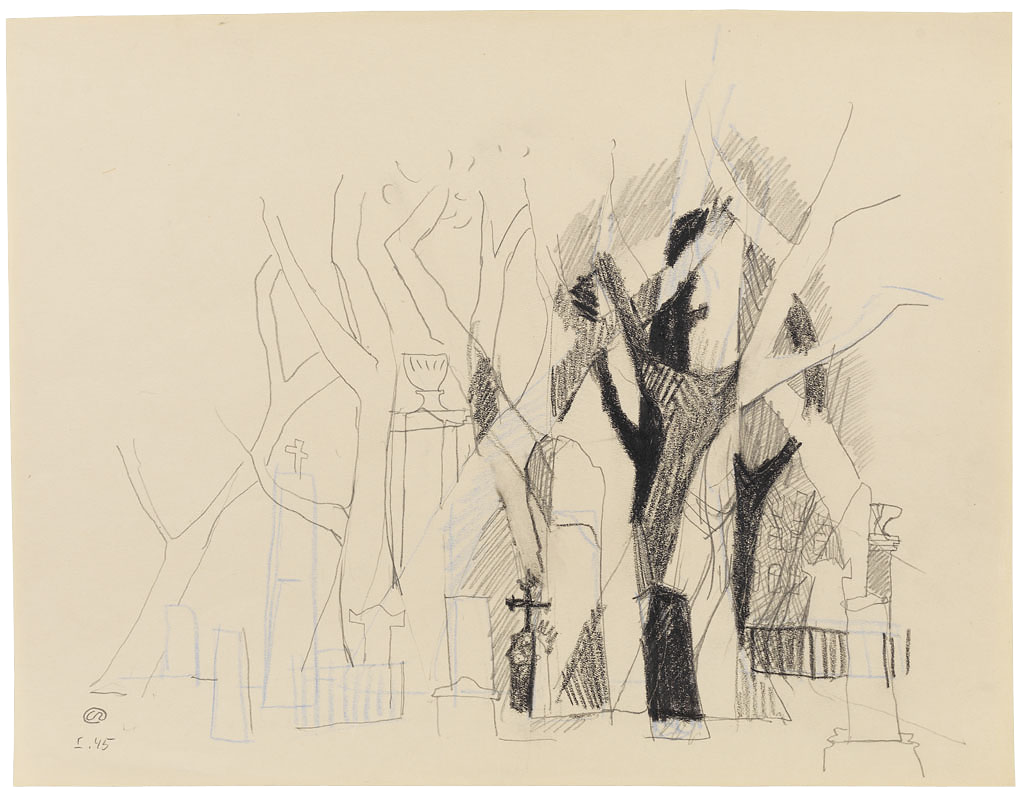
(Kyrkogården), 1945
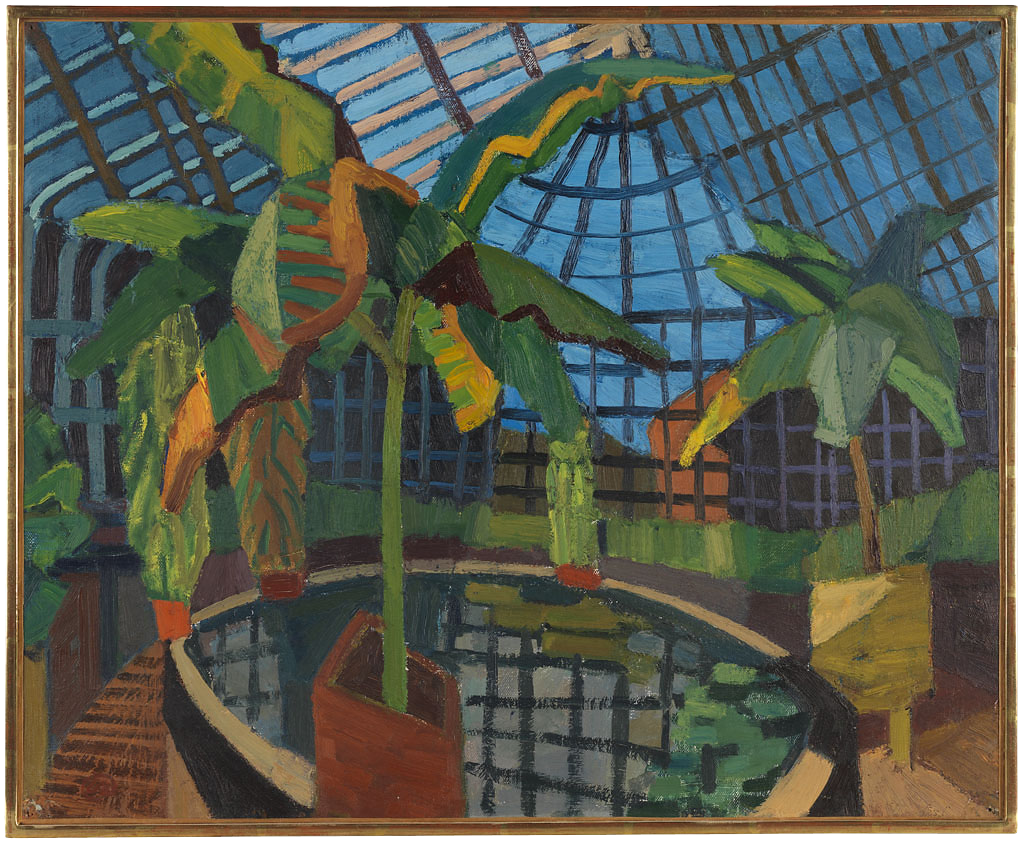
(Växthuset), 1945 ca
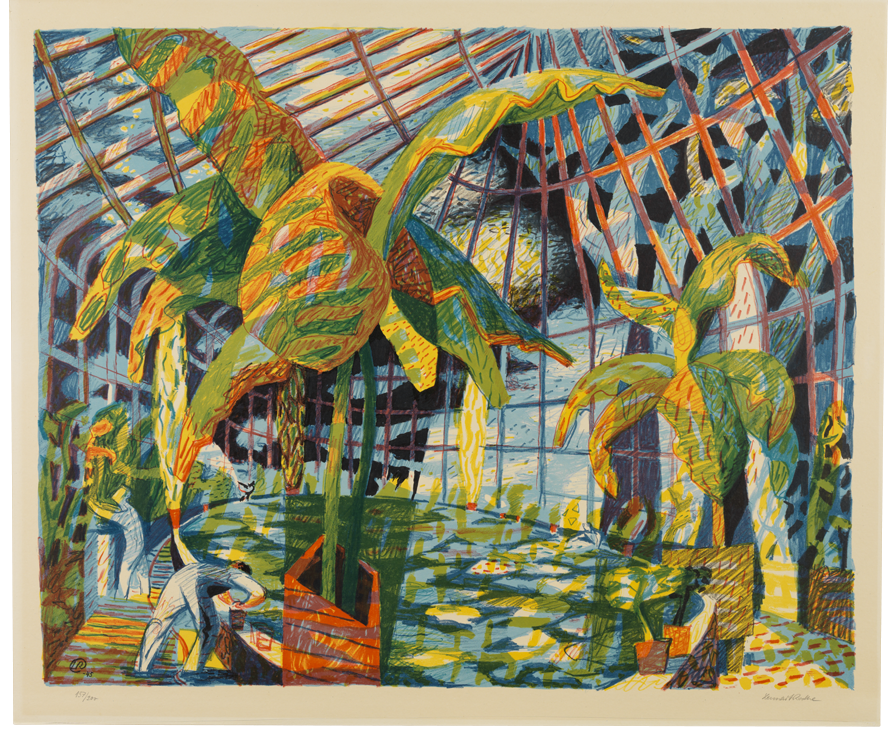
Växthuset, 1945
Further reading
Thomas Millroth, Lennart Rodhe, Sveriges Allmänna Konstförening, Uddevalla 1989
Börje Magnusson och Thomas Millroth, Rodhe som grafiker, Atlantis, Värnamo 1993
Per Bjurström, Bagateller, Carlssons bokförlag, Malmö 1995
Per Bjurström, Blockteckningar och reseskisser, Carlssons bokförlag, Malmö 1995
Mailis Stensman, Rodhe som textilare, Norstedts förlag, Värnamo 1995
The book Rodhe som grafiker (Rodhe as a Graphic Artist) includes a comprehensive biography and bibliography, along with an index stating where his prints have been exhibited.