Rodhe spent several summers in the 1940s and early 1950s on the Swedish west coast. These sojourns generated a large number of landscape studies in the artless, immediate plein-air style, as in Cliffs by the Sea, 1946. The artist eventually began using geometric patterns under his scenes, which were painted on transparent architectural drawing paper. This is where he developed, and exhausted his triangular theme (Triangular Play, 1947) and these studies led to an increasingly abstract and concrete style. He explored themes such as Cracks in the Cliffs, Cracks, which in turn led to the theme The Surface Cleaves The Surface Cleaves several of which are in the Foundation’s collection. It was during this period that Rodhe received his first major public commission, which was to occupy him intensely for several years. Both the Stair theme in Ängbyskolan school (1953) and Package Belt, for Östersund Post Office (1952) include formal elements that the artist found in Bohuslän; the light and shade on the cliffs engendered the triangular shapes, and the twisted sea shells gave the spiral.
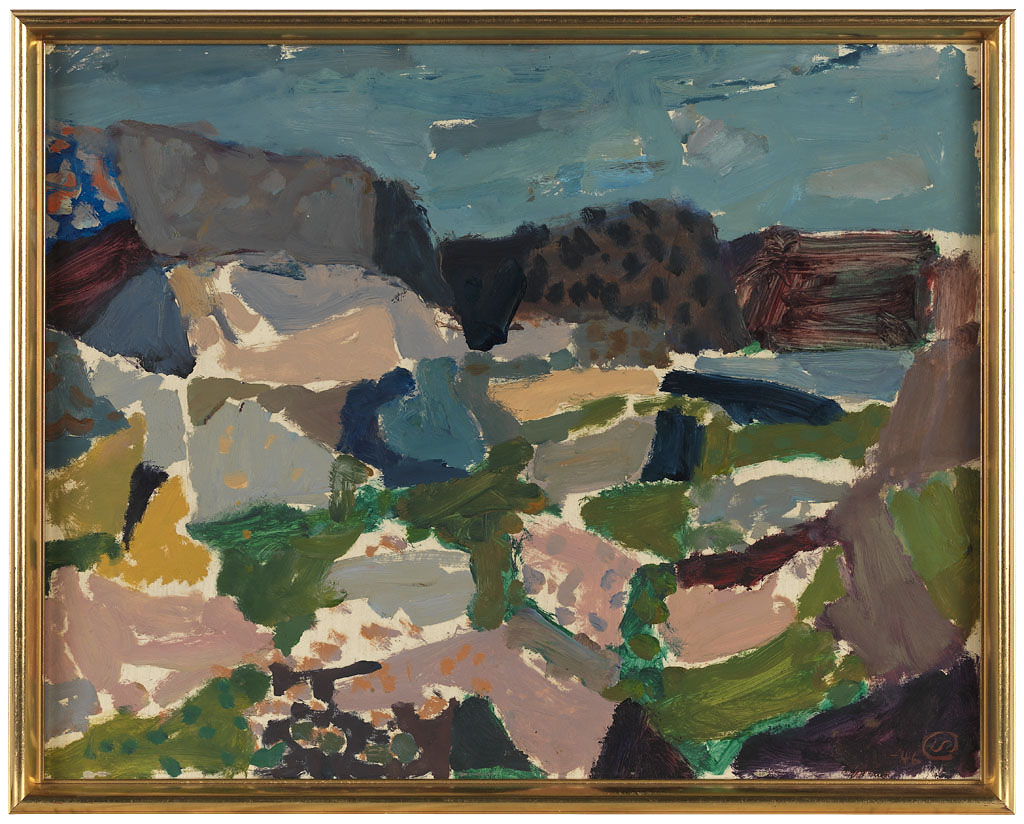
Klippor vid havet, 1946
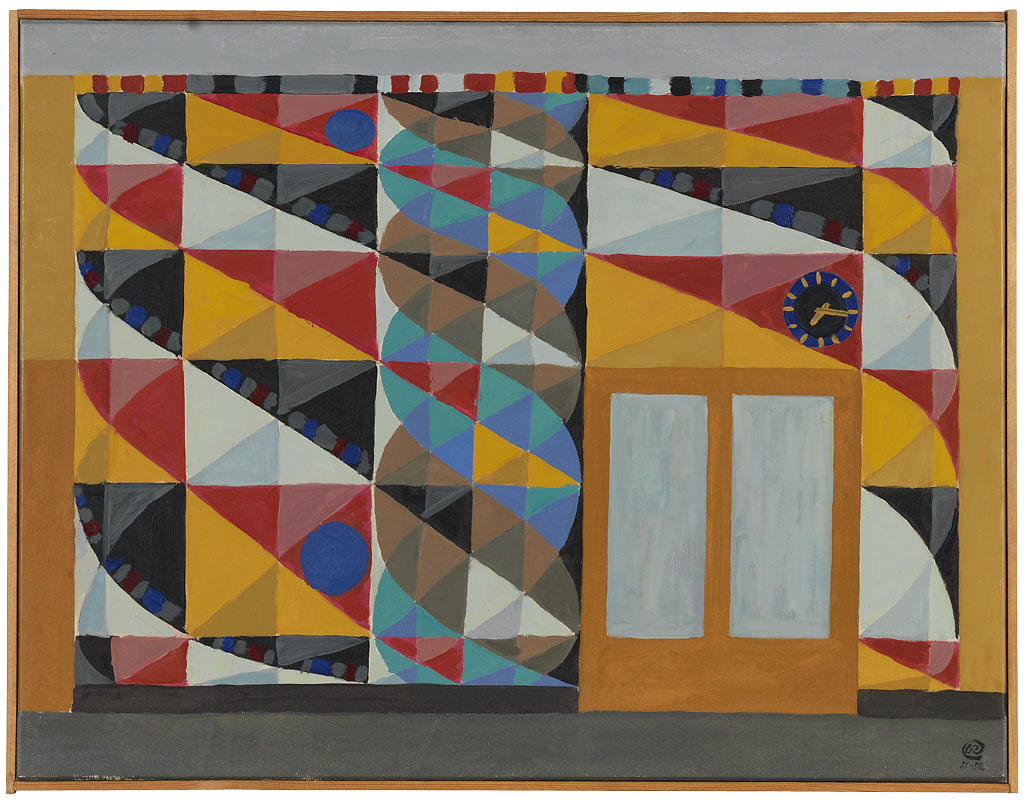
Paket i långa banor, 1951-52
Further reading
Thomas Millroth, Lennart Rodhe, Sveriges Allmänna Konstförening, Uddevalla 1989
Börje Magnusson och Thomas Millroth, Rodhe som grafiker, Atlantis, Värnamo 1993
Per Bjurström, Bagateller, Carlssons bokförlag, Malmö 1995
Per Bjurström, Blockteckningar och reseskisser, Carlssons bokförlag, Malmö 1995
Mailis Stensman, Rodhe som textilare, Norstedts förlag, Värnamo 1995
The book Rodhe som grafiker (Rodhe as a Graphic Artist) includes a comprehensive biography and bibliography, along with an index stating where his prints have been exhibited.