In the late 1990s, Rodhe began working on Water Lilies on the River, a new theme that was developed, like Shiva and Tiveden, into repeat prints the size of a wall. A photocopier was used to enlarge and reverse the elements. The theme is characterised by the photocopier’s enlarged, thick black lines, which the artist incorporated in his folklore-inspired patterns, as seen in Water Lilies on the River, (c 1999). This pattern was used mainly for prints, in smaller formats on Japanese paper, but also in large formats consisting of several parts that were joined up. In 1997, Rodhe was invited to participate in “Avesta Art”, for which he created a red version titled Avesta River. The following year, the motif featured on advertising pillars when Stockholm was Cultural Capital of Europe. The pattern is based on river currents, red-hot iron from the furnace, and water lilies and aquatic plants that curl decoratively across the surface, alluding to Avesta’s historic iron industry. Among the latest works in the collection are scenes from Flivik, the artist’s summer house in Småland, which he returned to often to capture the play of light in the summer greenery, in rapid, impressionist sketches, as in Flivik Drawing, 1999.
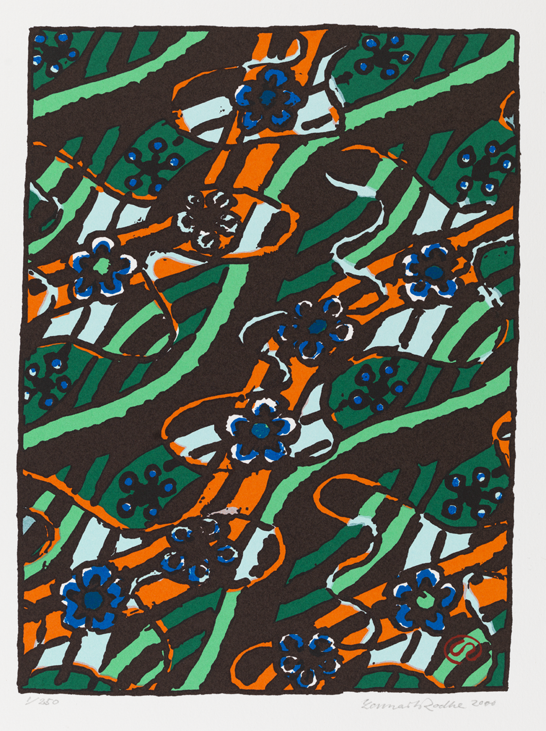
Näckrosor på strömmen (?) Linköping - blommönster, 1996-2000
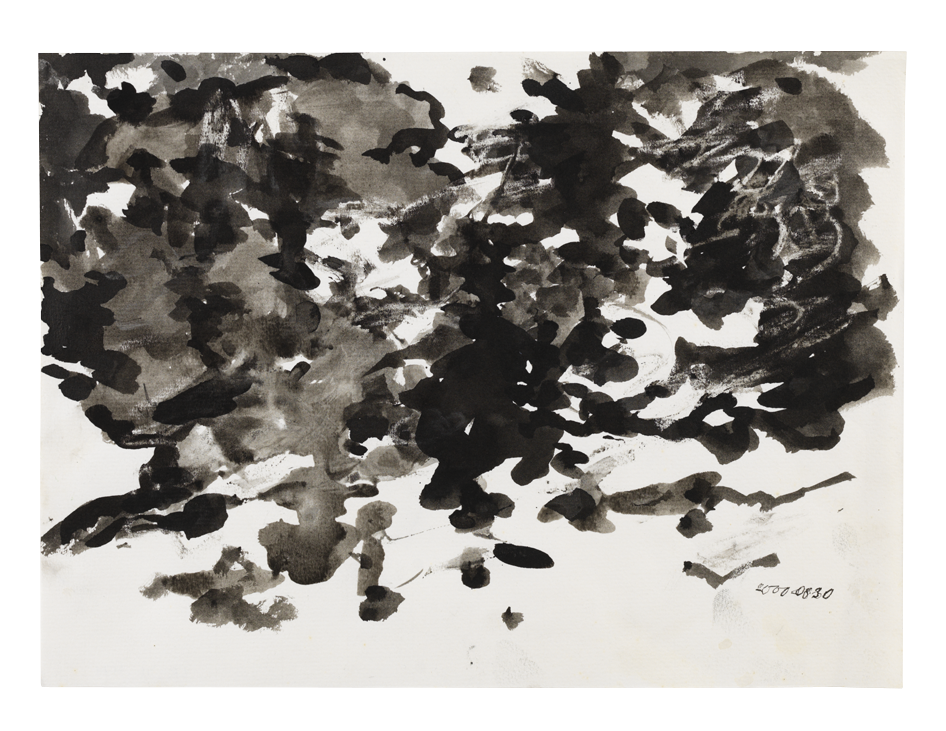
Fliviksteckning, 2000
Further reading
Thomas Millroth, Lennart Rodhe, Sveriges Allmänna Konstförening, Uddevalla 1989
Börje Magnusson och Thomas Millroth, Rodhe som grafiker, Atlantis, Värnamo 1993
Per Bjurström, Bagateller, Carlssons bokförlag, Malmö 1995
Per Bjurström, Blockteckningar och reseskisser, Carlssons bokförlag, Malmö 1995
Mailis Stensman, Rodhe som textilare, Norstedts förlag, Värnamo 1995
The book Rodhe som grafiker (Rodhe as a Graphic Artist) includes a comprehensive biography and bibliography, along with an index stating where his prints have been exhibited.